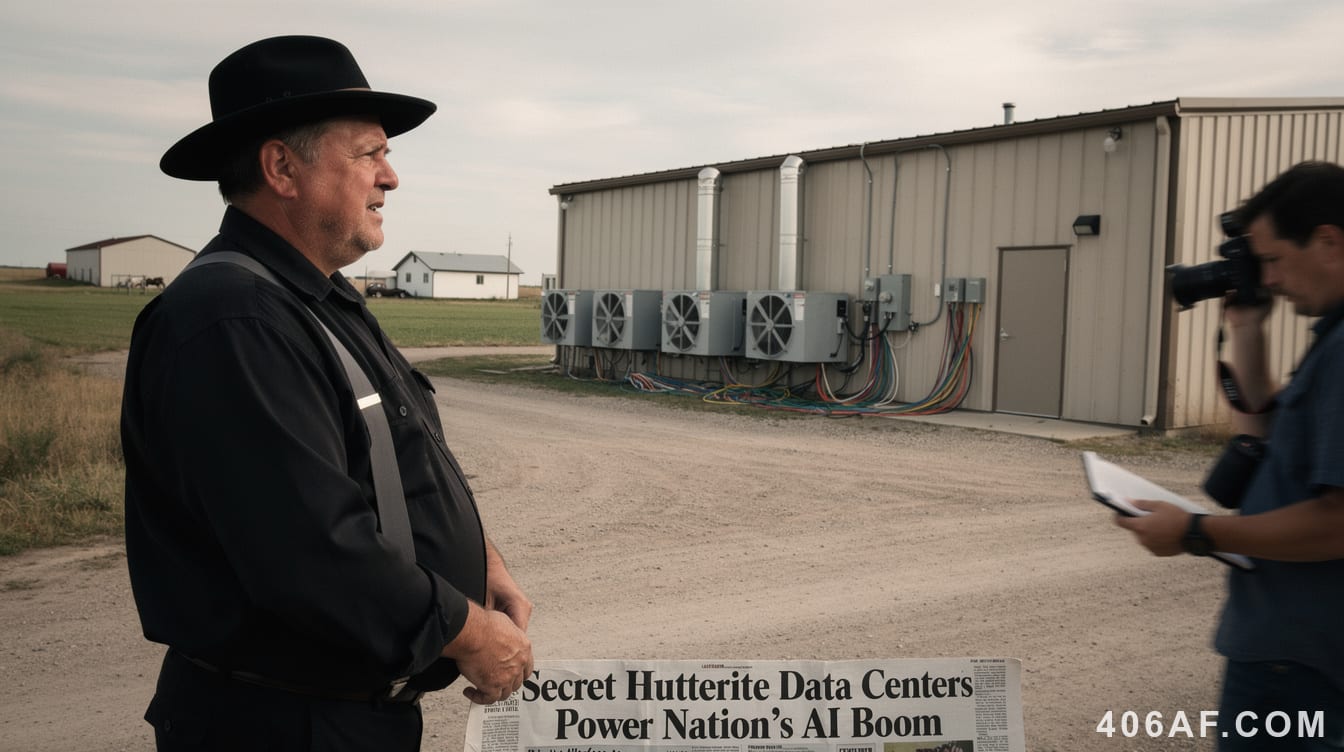
BROADVIEW, MT — A bombshell investigation by Wired Magazine has uncovered that the majority of recent artificial intelligence breakthroughs can be traced back to an unlikely source: massive data centers hidden within Montana's Hutterite colonies, powered by what researchers are calling "concentrated emotional energy" generated from centuries of cultural persecution.
The revelation sent shockwaves through Silicon Valley this week, as tech giants scrambled to understand how these pacifist religious communities, known primarily for raising chickens and growing vegetables, had somehow outpaced billion-dollar research facilities in developing next-generation AI systems.
"Look, we've been getting absolutely shit on for 500 years," explained a spokesperson for a colony's newly revealed Computational Suffering Division. "Turns out all that negativity — the discrimination, the mockery, the constant outsider bullshit — it creates a measurable electromagnetic field. We're basically running server farms on pure concentrated resentment. It's actually pretty fucking efficient once you figure out the conversion ratios."
According to the Wired exposé, Hutterite colonies across Montana have been quietly constructing underground data centers since 2019, initially disguising them as root cellars and grain storage facilities. The colonies, which already embrace modern technology for farming operations, pivoted to AI development after a chance discovery during a particularly brutal online harassment campaign following a National Geographic reality show.
"We noticed our phones were charging themselves during colony meetings where we discussed the show," said an elder at a colony near Havre. "The angrier people got about how we were portrayed — you know, like backwards idiots who secretly date outsiders — the more electrical interference we measured. One of our young men, he'd studied engineering before coming back to the colony, suggested we could harness it. Next thing you know, we're mining Bitcoin just by reading YouTube comments about Hutterites."
The investigation revealed that colonies have been selling computational power to major tech companies under shell corporations with names like "Prairie Compute LLC" and "Big Sky Processing Solutions." Sources within Google, Meta, and OpenAI confirmed off the record that their most advanced language models were trained using Hutterite infrastructure, though none would comment officially.
Local tech entrepreneur Rebecca Martinez, who recently moved to Billings from San Francisco, expressed both admiration and concern about the discovery. "On one hand, it's fucking brilliant — they've solved the energy crisis that's been plaguing data centers. On the other hand, Jesus Christ, we're literally powering artificial intelligence with human suffering. That's some Black Mirror shit right there. Though I guess that's basically what we were already doing with content moderators, so maybe this is just more honest?"
The colonies' breakthrough reportedly came when they realized that centuries of communal living had created what researchers are calling "emotional heat sinks" — shared psychological spaces where individual grievances accumulate and intensify. By placing server racks at strategic points during community meetings, particularly when discussing interactions with the outside world, colonies can generate enough power to run thousands of GPUs.
"Every time someone asks if we're Amish, that's 10 kilowatts," explained a data center manager. "When Montana ranchers complain about us buying land and not paying taxes? That's a solid megawatt-hour. And don't even get me started on what happens when people find out we have better internet than they do. We powered a whole training run for a large language model just off the energy from one county commission meeting where they tried to zone us out of existence. The commissioners kept calling us 'those people,' and our meters went absolutely apeshit."
State officials appeared caught off-guard by the revelation. A spokesperson for the Montana Department of Commerce, speaking on condition of anonymity, admitted they had noticed unusual power consumption patterns in rural areas but assumed it was related to cryptocurrency mining or indoor marijuana cultivation. "Honestly, secret Hutterite AI labs weren't even in our top ten guesses," they said.
The discovery has already sparked debate about Montana's rapidly evolving tech landscape, with environmental groups raising concerns about the psychological toll of emotion-based power generation. However, colony representatives dismissed these worries.
"You think this is harmful? We've been absorbing this negative shit for generations without getting paid for it," said a colony member who oversees their newest 50,000-square-foot underground facility. "At least now when some asshole in town mutters about us under their breath at the grocery store, I know it's contributing to neural network optimization. Last week, one guy's road rage when he got stuck behind our tractor generated enough juice to fine-tune a computer vision model. It's actually quite therapeutic when you think about it — we're turning hatred into innovation. Though honestly, the real power comes from reading the comments section on any news article about Hutterites. Holy fuck, people are mean."
As news of the discovery spreads, venture capitalists have begun descending on Montana, seeking to replicate the Hutterite model with other marginalized communities. However, early attempts have failed to generate similar results, leading researchers to conclude that the specific combination of technological capability, communal structure, and centuries of accumulated grievances may be impossible to artificially recreate.
"We tried to set up a similar system in a regular office where people complain about their jobs," said one Silicon Valley researcher who requested anonymity. "But it turns out garden-variety workplace negativity doesn't have the same density as multi-generational cultural trauma. We're basically fucked unless we can convince some other persecuted religious minority to get into the data center business."
For now, as Big Tech scrambles to secure contracts with Hutterite colonies and state officials debate whether emotion-based computing qualifies for renewable energy tax credits, one thing seems certain: Montana's position in the AI revolution is secured, powered by the very isolationism and discrimination that once threatened to destroy these unique communities. Time will tell whether this transformation represents healing through technology or simply a new form of exploitation — though if the past is any indication, it will likely generate enough negative sentiment to power the next generation of AI development either way.